
“We treat kidney ailments by uprooting its primary cause rather than its symptoms”
A Disease-free life is what every individual desire for. But nowadays Kidney disorders and renal failures are commonly encountered in worldwide clinical practices that have led to global health concerns.
Kidneys and their functions:
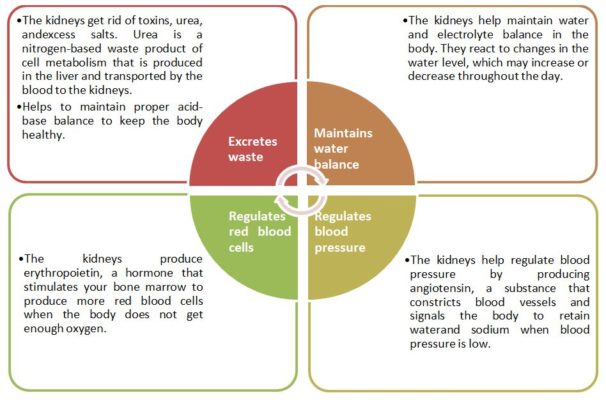
Kidneys are vital organs of a living being that filter waste products from the blood and expel them out of the body through the excretory system of the body. These are involved in:
- Excretion of wastes
- Re-absorption of vital nutrients
- Acid-base homeostasis
- Osmolality regulation
- Blood pressure regulation
- Hormone secretion.
- Maintaining electrolyte balance
- Red blood cell production.
Renal failure is a condition in which the Kidneys lose the function of filtering blood as more than 80% of the kidney gets damaged resulting in the exponential rise up of creatinine levels, urea levels and the levels of various electrolytes in a body get imbalanced. There could be multiple causes of renal failure Reasons could be many but the ultimate outcome of these diseases is the failure of the functioning of the kidney because of the damage that has been afflicted on the Kidneys due to various pathologies. The patient has to ultimately undergo dialysis as a part of his clinical kidney treatment regimen.
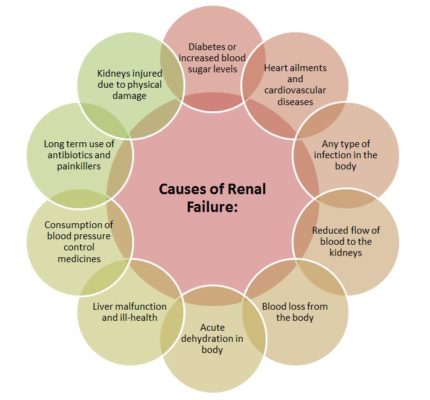
Causes of Renal Failure:
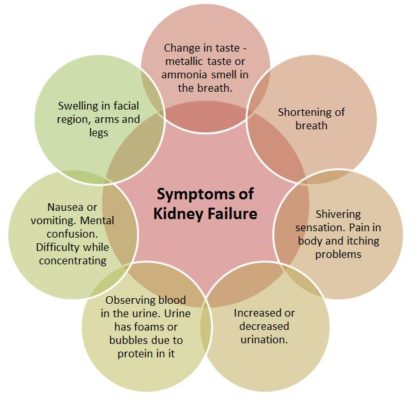
Symptoms of Kidney Failure:
When the kidney malfunctioning occurs, our body starts exhibiting some symptoms that are clear signs that the kidneys are not functioning properly. These symptoms can be easily identified and the doctor should be consulted for proper diagnosis of health status
How We Treat Renal Failures?
Ayurveda is a traditional healing science in India that works on the principle of targeting the cause and not the symptoms, taking into consideration the prakriti and dosha equilibrium of the patient. We use multiple therapies in conjunctions depending upon the health status and condition of patients along with the extent to which the kidneys have been affected.
Our Ayurvedic treatment of chronic renal failure is based on three principles:
- Treating the damaged kidneys
- Treating the body tissues (dhatus) which make up the kidneys
- Treating the known cause.
According to Ayurveda, the kidneys are made up of the “Rakta” and “Meda” dhatus. Treating these two dhatus is also an effective way to treat the kidneys. The known cause of chronic renal failure is treated using medicines which also act upon the kidneys. The term “Basti” refers to urinary tract from the kidney to bladder. Apanavayu is the controlling principle for the proper functioning of Basti. In vitiation of apanavayu, the act of micturition is affected. Ayurveda has also described various categories of Mutraroga like Mutraghata, Mutrakricch, Ashmari and a wide range of herbs and mineral drugs as therapeutic measures.
Our Approach:
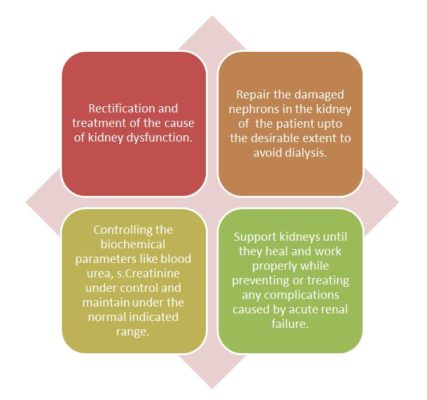
- Rectification and treatment of the cause of kidney dysfunction.
- Repair the damaged nephrons in the kidney of the patient up to the desirable extent to avoid dialysis.
- Controlling the biochemical parameters like blood urea, Serum Creatinine under control and maintain under the normal indicated range.
- Support kidneys until they heal and work properly while preventing or treating any complications caused by an acute renal failure.
Different Renal Pathologies:
Patients need to understand that there are various pathologies that cause the kidney failure. Clinical diagnoses can identify these pathologies on the basis of clinical tests. Some of these are as below:
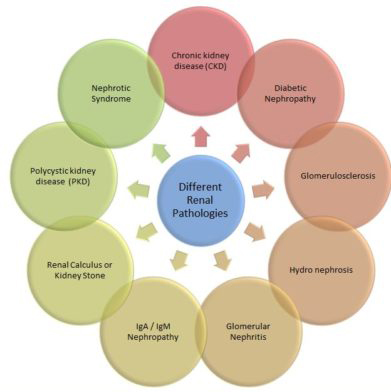
Chronic Kidney Disease (CKD) / End Stage Renal Disease (ESRD) CKD STAGE 6
Chronic kidney disease (CKD) is a condition characterized by a gradual loss of kidney function over a period of time. Chronic kidney disease includes conditions that damage your kidneys and decrease their ability to keep you healthy. If kidney disease gets worse, wastes can build to high levels in your blood and you may develop complications like high blood pressure, anemia (low blood count), weak bones, poor nutritional health and nerve damage. Chronic kidney disease may be caused by diabetes, high blood pressure, and other disorders. Early detection and treatment can often keep chronic kidney disease from getting worse. When kidney disease progresses it may lead to kidney failure which requires dialysis or a kidney transplant to maintain life.
Chronic kidney disease (CKD) encompasses a spectrum of different pathophysiologic processes associated with abnormal kidney function and progressive decline in Glomerular filtration rate (GFR). Based on the guidelines of the National Kidney Foundation [Kidney Dialysis Outcomes Quality Initiative (KDOQI)], in which stages of CKD are defined according to the estimated GFR. All individuals with GFR <60 ml/min/1.73 m2 for 3 months are classified as having chronic kidney disease, irrespective of the presence or absence of kidney damage. The rationale for including these individuals is that reduction in kidney function to this level or lower represents a loss of half or more of the adult level of normal kidney function, which may be associated with a number of complications.
Our Renal Failure Management Therapy: The REUC Therapy for CKD / ESRD CKD STAGE 6
We here at Nirogam use the REUC therapy for the treatment and management of renal Disorders. In our REUC therapy, we aim to identify and rectify the cause of kidney dysfunction. Our therapy targets to support the kidneys until they have healed and can work properly while preventing or treating any complications caused by an acute renal failure. The medicines aim to repair the damaged nephrons (functional unit of kidneys) in the kidney of the afflicted patient to the desired extent to avoid dialysis.
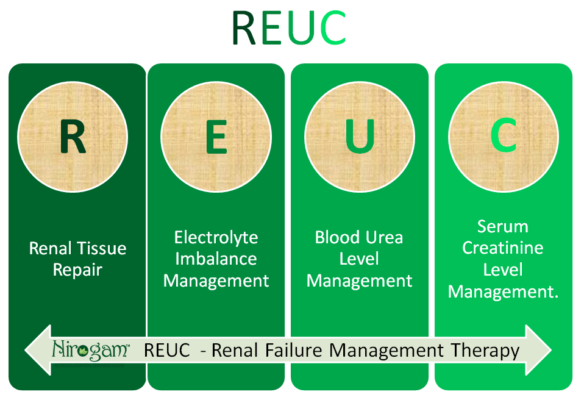
Step 1: R- Renal tissue repair:
- Repair the inflamed renal tissue to an optimal extent
- Restoration of biochemical parameters (Blood Urea and Serum Creatinine) normalized.
- Target and treat the underlying cause of kidney disorders
- Aims to repair the damaged nephrons to the desirable extent
- Kidney filters out toxin and maintains these levels naturally.
Step 2: E- Electrolyte imbalance management:
- Maintain the levels of electrolytes (Sodium, Potassium, etc.) to the required levels in the blood
- Imbalance of these can cause kidney impairment and endanger the life of the patient.
- Aims to maintain a check on electrolyte levels and maintaining within normal range.
Step 3: U- Blood Urea level management
- Maintain equilibrium of Blood Urea levels in the body
- Imbalance cause various undesirable complications ranging from mild ones like itching, loss of appetite, etc. to severe ones like fits and loss of consciousness
- Aims to use our medication that acts the quickest in restoring the Blood Urea levels
- Generally, the level starts decreasing right from the very first dosage of our medicine.
Step 4: C- Serum Creatinine level management:
- Restore the Serum Creatinine levels of our patient to its normal value.
- With our medicine, the functioning of the impaired kidney is restored gradually
- Serum Creatinine level of the patient starts to decrease from 7th day to 15th day of our medication.
Polycystic kidney disease (Kidney Cyst)
It is a genetic disorder that causes numerous cysts to grow in the kidneys. A gene mutation, or defect, causes polycystic kidney disease. It causes fluid-filled cysts to form in the kidneys. It’s a disease in which the size of the kidney goes on increasing due to the formation of multiple cysts in the kidneys. These Cysts go on displacing the nephrons and as a result, the functional part of the kidneys goes on decreasing. With the passage of time the patient develops renal failure. PKD if left untreated may impair kidney function and cause kidney failure. Our ayurvedic medicines aim to heal nephrons in the kidney to the desirable extent to avoid total kidney impairment and halt the advancement of disease to avoid dialysis and kidney transplant.
Ayurvedic Treatment for Polycystic kidney disease (Kidney Cyst): Ayurveda believes that this condition is caused due to the vitiation of Pitta dosha in the body and various Pitta normalizing medications are used in the treatment of the same. Ayurvedic treatment is a traditional treatment in India and works on the principle of targeting the cause and not symptoms, taking into consideration the prakriti and dosha equilibrium of the patient.
When it comes to the treatment of Lesion kidney disease, we work on two aspects:
- Prevention of formation of new cysts with the usage of our ayurvedic srotoshodhak medications.
- Repair of damaged nephrons, i.e. the damage that has already occurred to the functional units of a kidney due to the pressure exerted by multiple lesions.
Nephrotic Syndrome:
It is nonspecific disorder in which the kidneys are damaged, which causes them to leak large amounts of protein from the blood into the urine. Kidneys affected by nephrotic syndrome have small pores in the podocytes, large enough to permit proteinuria but not large enough to allow cells through. By contrast, in nephrotic syndrome, RBC’s pass through the pores, causing hematuria.
Symptoms of Nephrotic Syndrome:
- Hypoalbuminemia (low level of albumin in the blood)
- Hypercholesterolemia (high level of cholesterol in the blood)
- Severe swelling (edema), particularly around your eyes and in your ankles and feet
- Foamy urine, which may be caused by excess protein in your urine
- Weight gain due to excess fluid retention
Ayurvedic Treatment of Nephrotic Syndrome: Ayurveda is one of the most preferred treatment systems for nephrotic syndrome because the allopathic treatment for the same includes the administration of corticosteroids in a heavy dosage which can cause a number of side-effects in the body. Ayurveda believes that this condition is caused due to the vitiation of pitta dosha in the body, and various pitta normalizing medications are used in the treatment of the same. The medication starts showing a decrease in protein leakage in most patients’ right from the first week itself.
Albuminuria / Proteinuria
Albuminuria is a pathological condition wherein albumin is present in the urine. It is a type of proteinuria.
Symptoms of Albuminuria / Proteinuria:
- Heavy whitish foam in urine
- Swelling of the ankles, hands, tummy or the face.
Causes of Albuminuria / Proteinuria: Kidneys normally do not filter large molecules into the urine, so albumin urea can be an indicator of damage to the kidneys. It can also occur in patients with long-lasting diabetes, especially type I diabetes. Causes of albumin urea can be discriminated between by the amount of protein excreted. The nephrotic syndrome usually results in the excretion of about 3.0 to 3.5 grams per 24 hours.
Nephrotic syndrome results in far less albuminuria. Micro-albuminia (Between 30 and 300mg/24,mf/1 of urine or pig/mg of creatinine ) can be a forerunner of diabetic nephropathy
Ayurvedic Treatment of Albuminuria / Proteinuria: Ayurvedic treatment proves to be very effective and the patient starts showing signs of improvement right from the very first week. The medication and mode of treatment are almost similar as has been mentioned in the treatment of the nephrotic syndrome.
Glomerulonephritis / Nephritis Kidney Disease
It is also known as glomerular nephritis, abbreviated as GN, is a renal disease characterized by inflammation of the glomeruli, or small blood vessels in the kidneys. It may be present with isolated hematuria and proteinuria or acute renal failure or chronic renal failure. They are categorized into several different pathological patterns, which are broadly grouped into non-proliferative or proliferative types. Diagnosing the pattern of GN is important because the outcome and treatment differ in different types. Primary causes are ones which are intrinsic to the kidney whereas Secondary causes are associated with certain infections, drugs, systemic disorder or diabetes.
Ayurvedic Treatment: Ayurvedic treatment is very effective in the cases of Glomerulonephritis. It is considered to be a pitta imbalanced disease. Some of the medications used in this case are similar to nephrotic syndrome while in addition to that a heavy dose of immunomodulator herbs and minerals is required.
Renal Stones/Renal Calculi
A Kidney stone which is also known as renal calculus is a solid concretion or crystal aggregation found in the kidneys from dietary minerals in the urine. It is typically classified by its location in kidney and is classified as-Nephrolithiasis, Ureterolithiasis, and Bladder Cystolithiasis or by chemical composition (Calcium containing struvite, uric acid or other compounds.)
Kidney stones typically leave the body through urine stream and many stones while passing through ureter can cause severe symptoms if stones grow to a sufficient size, they can cause obstruction in the ureter. Ureteral obstruction causes post renal azotemia and hydronephrosis (distention and dilation of pelvis and calyces as well as spasm of the ureter. This leads to pain, most commonly felt in flank, lower abdomen and groin (A condition called Renal Colic) Renal colic can be associated with nausea, vomiting, fever, blood in the urine, pus in urine and painful urination.
Causes: Dietary factors that increase the risk of stone formation include low fluid intake, high dietary intake of animal protein, sodium, refined sugars, fructose and high fructose corn syrup, oxalate, grapefruit juice, apple juice and cola drinks, less intake of fluids can be a major cause.
Ayurvedic Treatment: Kidney stones have been healed using herbs since ages with really encouraging results. For stones which are painful, Ayurvedic formulations give very quick relief and the approximate time depends upon the location of the stone and the size of the stone. The following time periods have been calculated as per our experience.
Size of stone Time period (approx.)
- Below 5mm 10 days
- Below 10mm 1month
- Below 15mm 2months
- Below 20mm 3months
- Above 20mm 6months
OUR RANGE OF PRODUCTS FOR KIDNEY RELATED DISORDERS
The advantage of using AyurvedicNirogam Medicines in chronic renal failure is that in most patients, kidney damage can be either partly or fully reversed, the frequency of dialysis can be reduced, and the increased risk of death from cardiovascular diseases can be significantly reduced.
Thus, Ayurvedic medicines have the potential for an important therapeutic contribution in all the stages of this condition.

- Acts as a natural diuretic and detoxifier
- Maintains optimum kidney health
- Helps to flush out toxins from the kidney
Composition:
- Punarnava (Boerhavia diffusa)
- Gokhru (Tribulus terrestris),
- BhuTulsi (Salvia plebeia),
- Guduchi (Tinospora cordifolia),
- Varuna ( Cratae vanurvala),
- DaruHaridra ( Berberis lycium),
- Pashanbheda (Berginia ligulata),
- SarivaShvet (Hemidesmus indicus),
- Amlavetas (Garcinia pedunculata),
- Asana (Pterocarpus marsupium),
- Shaal (Shorea),
- Khadira (Ascacia catechu),
- Kasni (Cichorium intybus),
- Lajjalu (Mimosa pudica),
- Karpoor (Cinnamomum camphora)
Dosage: 1 tablet – two times a day with hot water or Nirogam DT (if provided) after 30 min. of each meal or as per your Health care provider.
Uses:
- Prameha
- Mutrakrichra
- Mutraghata
- Ashmari

- Supports healthy urinary function
- Supports healthy elimination of toxins from kidneys
- Helps Cleansing The Urinary System
Description
Renal Care is a rejuvenating tonic for the kidneys and adrenals. It supports healthy urinary flow. It helps to sooth the urinary system and supports the entire urinary tract including the kidneys, bladder and urethra. It increases the flow of urine which flushes kidney wastes and lowers the urinary oxalates.
Composition:
- Punarnava (Boerhaavia diffusa),
- Gokhru (Tribulus terrrestris),
- Varuna (Cratae vanurvala),
- Kultha (Dolichos biflorus),
- Pasanabheda (Bergenia ligulata),
- Devadaru (Cedrus deodara),
- BhumiAmla (Phyllanthus niruri),
- Chharila (Parmelia perlata),
- Jevanti (Leptadenia reticulata),
- Lajauni (Mimosa Pudica),
- Motha (Cyperus rotundus),
- Motipishti (Pearl)
Dosage: 2 tablets two times a day with hot water or Nirogam DT(if provided) after 30 min. of each meal or as per your Healthcare provider.
Uses:
- Prameha
- Mutrakrichra
- Mutraghata
- Ashmari
Page Guide
Kidneys and their functions
Causes of Renal Failure
Symptoms of Kidney Failure
How We Treat Renal Failures
Our Approach
Different Renal Pathologies
Nephrotic Syndrome
Consultation on Call
Related Blogs
Kidney Treatment in Ayurevda, Kidney Stone Treatment, Acute Renal Failure Treatment, Kidney Naturally Treatment, Ayurvedic Treatment for Kidney Failure, Natural Treatment for Kidney Infection, We Repairing Damaged Kidneys,Ayurvedic Treatment For Kidney Failure,Renal Failure Treatment in Ayurveda,Chronic Kidney Disease Treatment in Ayurveda,Kidney Treatment Without Dialysis,Kidney Treatment in Ayurveda,Ayurvedic Treatment For Kidney,Say No to Dialysis